Showing posts with label Week 13. Show all posts

Wednesday, April 21, 2021

Week 13 Story: An Orwellian Farm

    "Hey. Hey you!" Little Red was hunched behind the pig pen, and his cramping limbs were happy to finally see the Pig. He'd been waiting to talk with him for most of the day. 

    The Pig started and peered cautiously around the corner. "What are you doing here? Shouldn't you be out plowing?" he asked haughtily. 

    Little Red tried not to let the Pig's demeanor get to him. "I'm here to help you, you fool. I have a warning."

    The Pig continued to look cautious, but some of his aloof stance was replaced by one of curiosity. 

    "All of that fancy food you have been eating- its to fatten you for slaughter! The farmer's wife is getting married, and you are to be the main course." continued Little Red. 

    "Ha. There are words of caution coming out of your mouth, but all I hear is jealousy. I see you across the farm, working from dusk 'til dawn and only getting a meager ration of hay in return. Don't try to come here and convince me that I am the one actually getting the short end of the stick." scoffed the Pig. 

    "I'm not going to pretend like my life is perfect, but listen here, pal - I'm sticking my neck out for you here. My dad, Big Red, was too scared to come and tell you himself - didn't want to get caught by the farmer, ya see? Don't believe me? Fine. Just ask yourself what happened to all of your pals after they got all nice and fat. Really believe, I mean deep down believe, that they were sent off to some nicer farm to frolic around? Come on. Stop kidding yourself. That's a children's story." 

    Little Red started to turn around and leave, when suddenly the Pig pipped up, fear lacing his every word. 

"Ok! Ok. You've got me listening. What's the plan?"
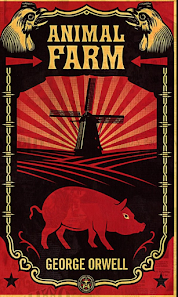
(The next story to read. Source: Flickr)


Bibliography: Babbitt Jataka Tales. Story: The Ox Who Envied the Pig

Author's Note: I thought that the moral of this story might have been more sinister than the original story let on. The original seemed to suggest that one ought to not envy those around us who have more because they are destined for disaster. I thought, however that the moral was that, in the system set up by the farm, there really was not winning. Either you get to live a long life but toil and get no real rewards, or you get to live high and mightily, but only for a time. The only one who really "won" in the story was the farmer who got the oxen to work for him and got to eat the pig. It seems like the only sensible thing for the animals to do is to rise up and revolt.... 

Reading Notes, Babbitt Jataka Tales: The Ox Who Envied the Pig

Bibliography: Babbitt Jataka Tales. Story: The Ox Who Envied the Pig

Notes: Hmmmmm. I don't know what to make of this story. At first glance, it seems that the story is trying to tell us not to envy the people who have more than we do, because they are destined for failure (or, in the case of the story, food). Yet I think that the meaning of the story might be more sinister than that. If you think about it, the oxen don't actually have some wonderful life. Sure, they are actually alive at the end of the story, but they only reason they are is because they have use as beasts of burden. In return for their labor, they are fed rather poorly. Not that the pig's life is much better. He gets to live high and mighty, but only for a while... 

        Looking at it this way, the moral of the story seems more to be that you can't really win. There is no way, at least in the setting that has been established in the story, to live both well and for a long time. That is, unless you are the farmer. It must all seem rather dystopian to the animals, this way of life. 

        I think that this might be an interesting way to approach a story- a dystopian setting for a dystopian moral. Perhaps there could be tidbits of a revolution thrown in there as well as the characters realize that what is needed in order for them to escape this caged existence is for them to revolt against the farmer character. The real moral could be, essentially, that rampant capitalism is bad. The farmer represents the 1% who literally feasts on and exploits the other 99%. Very Animal Farm..... 

        I just also think that it would be more fun to write this story in a dystopian setting than in the "real world". 


(Storytelling Inspiration. Source: Flickr)


Extra Credit Reading Notes, Babbitt Jataka Tales: The Sandy Road

Bibliography: Babbitt Jataka Tales. Story: The Sandy Road

Notes: I am really intrigued by this story. A number of the Jataka tales that I have read have been somewhat untraditional moralistic tales in that they have not really presented a moral. I don't really know if it is fair for me to be comparing the stories to "moralistic tales" since that may not actually be the point of the stories, but most stories tend to have a deeper meaning, which I have struggled to find in some of the stories (though that may be more of a personal failing than one of the story). This story, however, is unconventional in a different way. Most moralistic tales (I will just continue to use this classification because I think it is the closest one I know to use) have "good" and "bad: characters or "wise" and "foolish" characters (think "The Wise and the Foolish Merchant", though I had thoughts on that that can be seen in my reading notes on the story). This story combines both of those tropes into one character. The merchant is both the foolish one and the wise one. He is the one who makes the questionable decision to throw away the water and firewood before they are out of the desert, but he is also the one who does not give up and finds the place for the well. I really like this actually, since it presents a much more realistic view of how the world works. There are not completely "good" or "evil" people, neither are there completely "wise" or "foolish" ones. People make mistakes. Yet, as my grandfather used to say, "It is only a mistake if you don't learn from it." Perhaps in a re-telling of this story I could have the merchant, now old, telling his grandchildren this story and incorporate my own grandfathers wise words in there as the "moral". 

(A sight that would make most people want to give up. Source: pxhere)


Week 14 Lab: Advice to Writers

 Advice to Writers      One of the reasons that I was initially drawn to this class was that I wanted to get more into writing. Now that I h...